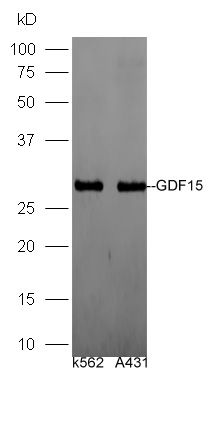
产品货号:jlcR3818 英文名称:GDF15 中文名称:生长分化因子15/巨嗜细胞抑制因子1抗体 别名:GDF 15; GDF-15 Growth differentiation factor 15; Growth/differentiation factor 15; Macrophage inhibitory cytokine 1; MIC 1; MIC-1; MIC1; NAG 1; NAG1; NRG 1; NRG1; NSAID (nonsteroidal anti inflammatory drug) activated protein 1; NSAID; NSAID regulated protein 1; PDF; PLAB; Placental bone morphogenetic protein; Placental bone morphogenic protein; Placental TGF beta; placental transformation growth factor beta; Prostate differentiation factor; PTGF beta; PTGFB; prostate derived factor. 研究领域:肿瘤细胞生物免疫学信号转导细胞凋亡生长因子和激素转录调节因子 抗体来源:Rabbit 克隆类型:Polyclonal 交叉反应: Human, Mouse, Rat, 产品应用:WB=1:500-2000 ELISA=1:500-1000 IHC-P=1:400-800 IHC-F=1:400-800 IF=1:100-500 (石蜡切片需做抗原修复) not yet tested in other applications. optimal dilutions/concentrations should be determined by the end user. 分子量: 12.5/34kDa 细胞定位:分泌型蛋白 性状:Lyophilized or Liquid 浓度:1mg/ml 免疫原:KLH conjugated synthetic peptide derived from human GDF-15:221-308/308 亚型:IgG 纯化方法:affinity purified by Protein A 储存液:0.01M TBS(pH7.4) with 1% BSA, 0.03% Proclin300 and 50% Glycerol. 保存条件:Store at -20 °C for one year. Avoid repeated freeze/thaw cycles. The lyophilized antibody is stable at room temperature for at least one month and for greater than a year when kept at -20°C. When reconstituted in sterile pH 7.4 0.01M PBS or diluent of antibody the antibody is stable for at least two weeks at 2-4 °C. PubMed : PubMed 产品介绍background: Growth differentiation factor 15 (GDF15) is a member of the bone morphogenetic protein (BMP) family and the TGF-beta superfamily. It has been implicated in a variety of functions directly related to tumorigenicity including antiproliferative and pro-apoptotic effects. BMP proteins are secreted growth factors that are characterized by seven conserved cysteine residues. In general, they are regulators of cell growth and differentiation in both embryonic and adult tissues. GDF15 is an important downstream mediator of DNA damage signaling and a transcriptional target of p53.
Subcellular Location: Secreted.
Tissue Specificity: Highly expressed in placenta, with lower levels in prostate and colon and some expression in kidney.
Similarity: Belongs to the TGF-beta family.
SWISS: Q99988
Gene ID: 9518
Important Note: This product as supplied is intended for research use only, not for use in human, therapeutic or diagnostic applications.