英文名称phospho-PPAR alpha (Ser12)
中文名称
磷酸化α型-过氧化酶活化增生受体抗体别 名PPAR alpha (phospho-Ser12); PPAR alpha (phospho-S12); p-PPAR alpha (Ser12); p-PPAR alpha (S12); hPPAR; MGC2237; MGC2452; NR1C1; Nuclear receptor subfamily 1 group C member 1; Peroxisome Proliferator Activated Receptor alpha; PPAR; PPAR alpha; PPARA; OTTHUMP00000197740; OTTHUMP00000197741; Peroxisome proliferator-activated receptor alpha; PPAR-alpha; PPARA_HUMAN; PPARalpha.
规格100ul
产品类型磷酸化抗体
研究领域肿瘤 细胞生物 免疫学 转录调节因子 激酶和磷酸酶
抗体来源Rabbit
克隆类型Polyclonal
交叉反应 Human, Mouse, Rat, Dog, Pig, Cow, Horse, Guinea Pig,
产品应用WB=1:500-2000 ELISA=1:500-1000 IHC-P=1:400-800 IHC-F=1:400-800 IF=1:100-500 (石蜡切片需做抗原修复)
not yet tested in other applications.
optimal dilutions/concentrations should be determined by the end user.
分 子 量52kDa
细胞定位细胞核
性 状Lyophilized or Liquid
浓 度1mg/ml
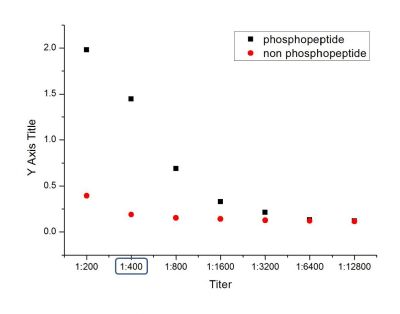
免 疫 原KLH conjugated Synthesised phosphopeptide derived from human PPAR alpha around the phosphorylation site of ser12:PL(p-S)PL
亚 型IgG
纯化方法affinity purified by Protein A
储 存 液0.01M TBS(pH7.4) with 1% BSA, 0.03% Proclin300 and 50% Glycerol.
保存条件Store at -20 °C for one year. Avoid repeated freeze/thaw cycles. The lyophilized antibody is stable at room temperature for at least one month and for greater than a year when kept at -20°C. When reconstituted in sterile pH 7.4 0.01M PBS or diluent of antibody the antibody is stable for at least two weeks at 2-4 °C.
PubMedPubMed
产品介绍background:
Peroxisome proliferators are nongenotoxic carcinogens which are purported to exert their effect on cells through their interaction with members of the nuclear hormone receptor family, termed Peroxisome Proliferator Activated Receptors (PPARs). Nuclear hormone receptors are ligand dependent intracellular proteins that stimulate transcription of specific genes by binding to specific DNA sequences following activation by the appropriate ligand. Studies indicate that PPARs are activated by peroxisome proliferators such as clofibric acid, nafenopin, and WY-14,643, as well as by some fatty acids. It has also been shown that PPARs can induce transcription of acyl coenzyme A oxidase and cytochrome P450 A6 (CYP450 A6) through interaction with specific response elements. PPAR alpha is activated by free fatty acids including linoleic, arachidonic, and oleic acids. Induction of peroxisomes by this mechanism leads to a reduction in blood triglyceride levels. PPAR alpha is expressed mainly in skeletal muscle, heart, liver, and kidney and is thought to regulate many genes involved in the beta-oxidation of fatty acids. Activation of rat liver PPAR alpha has been shown to suppress hepatocyte apoptosis. PPAR alpha, like several other nuclear hormone receptors, heterodimerizes with retinoic X receptor (RXR) alpha to form a transcriptionally competent complex.
Function:
Ligand-activated transcription factor. Key regulator of lipid metabolism. Activated by the endogenous ligand 1-palmitoyl-2-oleoyl-sn-glycerol-3-phosphocholine (16:0/18:1-GPC). Activated by oleylethanolamide, a naturally occurring lipid that regulates satiety (By similarity). Receptor for peroxisome proliferators such as hypolipidemic drugs and fatty acids. Regulates the peroxisomal beta-oxidation pathway of fatty acids. Functions as transcription activator for the ACOX1 and P450 genes. Transactivation activity requires heterodimerization with RXRA and is antagonized by NR2C2.
Subunit:
Heterodimer; with RXRA. This heterodimerization is required for DNA binding and transactivation activity. Interacts with AKAP13, LPIN1 and PRDM16. Also interacts with PPARBP coactivator in vitro. Interacts with CITED2; the interaction stimulates its transcriptional activity (By similarity). Interacts with NCOA3 and NCOA6 coactivators. Interacts with ASXL1 AND ASXL2.
Subcellular Location:
Nucleus.
Tissue Specificity:
Skeletal muscle, liver, heart and kidney.
Similarity:
Belongs to the nuclear hormone receptor family. NR1 subfamily.
Contains 1 nuclear receptor DNA-binding domain.
SWISS:
Q07869
Gene ID:
5465
Database links:
Entrez Gene: 5465 Human
Entrez Gene: 19013 Mouse
Entrez Gene: 25747 Rat
Omim: 170998 Human
SwissProt: Q07869 Human
SwissProt: Q6I9S0 Human
SwissProt: P23204 Mouse
SwissProt: Q542P9 Mouse
SwissProt: P37230 Rat
Unigene: 103110 Human
Unigene: 710044 Human
Unigene: 212789 Mouse
Unigene: 9753 Rat
Important Note:
This product as supplied is intended for research use only, not for use in human, therapeutic or diagnostic applications.
| 产品图片 | 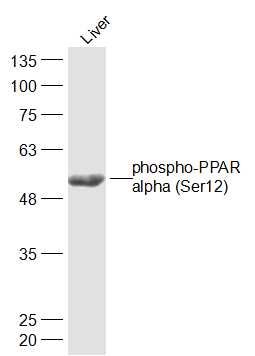
Sample:
Liver (Rat) Lysate at 40 ug
Primary: Anti-phospho-PPAR alpha (Ser12) (bs-4055R) at 1/300 dilution
Secondary: IRDye800CW Goat Anti-Rabbit IgG at 1/20000 dilution
Predicted band size: 52 kD
Observed band size: 52 kD
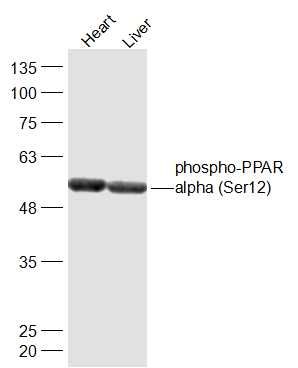
Sample:
Heart (Mouse) Lysate at 40 ug
Liver (Mouse) Lysate at 40 ug
Primary: Anti-phospho-PPAR alpha (Ser12) (bs-4055R) at 1/300 dilution
Secondary: IRDye800CW Goat Anti-Rabbit IgG at 1/20000 dilution
Predicted band size: 52 kD
Observed band size: 52 kD
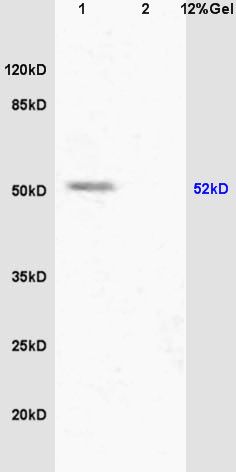
Sample:
Colon carcinoma (Human) Lysate at 40 ug
Embryo (Mouse) Lysate at 40 ug
Primary: Anti- phospho-PPAR alpha (Ser12) (bs-4055R) at 1/300 dilution
Secondary: HRP conjugated Goat-Anti-rabbit IgG (bs-0295G-HRP) at 1/5000 dilution
Predicted band size: 52 kD
Observed band size: 52 kD
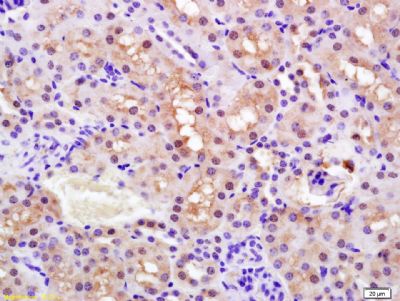
Tissue/cell: rat kidney tissue; 4% Paraformaldehyde-fixed and paraffin-embedded;
Antigen retrieval: citrate buffer ( 0.01M, pH 6.0 ), Boiling bathing for 15min; Block endogenous peroxidase by 3% Hydrogen peroxide for 30min; Blocking buffer (normal goat serum,C-0005) at 37℃ for 20 min;
Incubation: Anti-phospho-PPAR alpha(Ser12) Polyclonal Antibody, Unconjugated(bs-4055R) 1:200, overnight at 4°C, followed by conjugation to the secondary antibody(SP-0023) and DAB(C-0010) staining
phosphopeptide non phosphopeptide |








