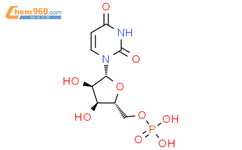
This Perspective outlines the coordinating properties of lead(II), to some extent in comparison with related metal ions like Ca2+, Zn2+ or Cd2+. It is worth noting that the affinity of Pb2+ towards phosphate residues corresponds to that of Cu2+. Furthermore, the binding tendency of Pb2+ towards thiophosphate groups as present in methyl thiophosphate (MeOPS2−) or uridine 5′-O-thiomonophosphate (UMPS2−) is compared with that of the parent ligands, that is, methyl phosphate (CH3OPO32−) and uridine 5′-monophosphate (UMP2−). The replacement of an O by a S atom makes the monoprotonated thiophosphate group considerably more acidic [compared to ROP(O)2−(OH)], but at the same time its affinity for Pb2+ increases tremendously: more than 99% of Pb2+ is S-bound. This is very different if the coordinating properties of uridylyl-(5′→3′)-[5′]-uridylate (pUpU3−) and P-thiouridylyl-(5′→3′)-[5′]-uridylate (pUp(S)U3−) are compared. The phosphate-coordinated Pb2+ forms a 10-membered chelate with one of the two terminal O atoms of the phosphodiester linkage, which reaches a formation degree of about 90% in Pb(pUpU)−. However, in Pb(pUp(S)U)− the formation degree of the chelate is reduced to about half in accordance with the fact that now only one terminal O atom is available in the thiophosphate diester bridge, that is, Pb2+ coordinates to this O showing no affinity for S in ROP(O)(S)−OR′. These observations are ascribed to the properties of the Pb2+ lone pair, which shapes the Pb2+ coordination sphere; its role is discussed further in this Perspective and a caveat is made regarding Pb2+ binding to a thiophosphate diester linkage.