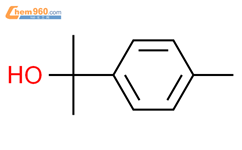
Radical cations of methylated benzenes and benzyl alcohols were generated by photoionization and by reaction with the oxidant SO4˙− in aqueous solution. The photoionization requires two 248 nm photons. The lifetimes and absorption spectra of the radical cations produced were determined by time-resolved conductance and optical detection, and the reaction products were measured by GC. As expected, the radical cation lifetimes increase strongly with increasing number of additional methyl groups, and so does the ratio of deprotonation from a methyl or hydroxymethyl group vs. addition (of water) to a ring position. In the case of toluene the radical cation appears to have a chemical lifetime τ of 10–100 ps ≤ τ ≤ 20 ns, i.e., longer than it takes for an ion pair to separate into the free (solvated) ions, and it reacts predominantly by addition of water to the ring rather than by deprotonation from the methyl group. A further observation is that, as compared to methoxylated analogues, the methylated benzyl alcohol radical cations are much more reactive, such that OH−-induction of side-chain fragmentation, as often required with methoxylated benzyl alcohol-type radical cations, is not necessary.