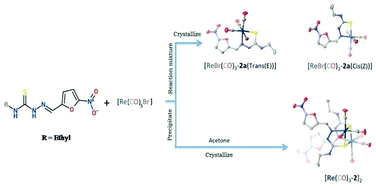
Methyl, ethyl and phenyl nitrofuryl thiosemicarbazone ligands (1, 2 and 3 respectively) were radiolabeled with freshly prepared aqueous solution of a fac[99mTc(CO)3(H2O)3]+ precursor. The radiochemical yield was around 98% as determined by thin layer chromatography and HPLC. The complexes exhibited substantial stability. The corresponding Re(I) complexes were prepared from a Re(CO)5Br precursor to understand the coordination behavior of the ligands against a tricarbonyl rhenium(I) precursor. The rhenium(I) complexes were characterized by means of IR, NMR and mass spectroscopic studies as well as by X-ray crystallography, and correlated with the technetium complexes by means of HPLC studies. Electrochemical reduction of monomeric Re(CO)3-complexes of nitrofuryl ethyl thiosemicarbazone was also studied using cyclic voltammetry. Biodistribution studies of 99mTc(CO)3-labeled thiosemicarbazones in rats intramuscularly infected with S. aureus exhibited substantial in vivo stability of the complex and moderate accumulation at the site of focal infection.