1. Signaling Pathways
  2. PI3K/Akt/mTOR
  3. PI3K

PI3K (磷脂酰肌醇3-激酶)

Phosphoinositide 3-kinase

PI3K(磷酸肌醇 3-激酶)通过肌醇脂质磷脂酰肌醇 4,5-二磷酸 (PI(4,5)P2) 的磷酸化,形成第二信使分子磷脂酰肌醇 (3,4,5)-三磷酸 (PI(3,4,5)P3),后者募集并激活含有 pleckstrin 同源域的蛋白质,从而引发对增殖、存活和迁移至关重要的下游信号传导事件。I 类 PI3K 酶由四种不同的催化异构体组成,即 PI3Kα、PI3Kβ、PI3Kδ 和 PI3Kγ。

PI3K 酶主要有三类,其中 IA 类与癌症密切相关。IA 类 PI3K 是异二聚脂质激酶,由催化亚基(p110α、p110β 或 p110δ;分别由 PIK3CAPIK3CBPIK3CD 基因编码)和调节亚基 (p85) 组成。

PI3K 通路在许多生物过程中起重要作用,包括细胞周期进程、细胞生长、存活、肌动蛋白重排和迁移以及细胞内囊泡运输。

PI3K (Phosphoinositide 3-kinase), via phosphorylation of the inositol lipid phosphatidylinositol 4,5-bisphosphate (PI(4,5)P2), forms the second messenger molecule phosphatidylinositol (3,4,5)-trisphosphate (PI(3,4,5)P3) which recruits and activates pleckstrin homology domain containing proteins, leading to downstream signalling events crucial for proliferation, survival and migration. Class I PI3K enzymes consist of four distinct catalytic isoforms, PI3Kα, PI3Kβ, PI3Kδ and PI3Kγ.

There are three major classes of PI3K enzymes, being class IA widely associated to cancer. Class IA PI3K are heterodimeric lipid kinases composed of a catalytic subunit (p110α, p110β, or p110δ; encoded by PIK3CA, PIK3CB, and PIK3CD genes, respectively) and a regulatory subunit (p85).

The PI3K pathway plays an important role in many biological processes, including cell cycle progression, cell growth, survival, actin rearrangement and migration, and intracellular vesicular transport.

Cat. No. Product Name Effect Purity Chemical Structure
  • HY-100398
    PF-04979064 Inhibitor 99.93%
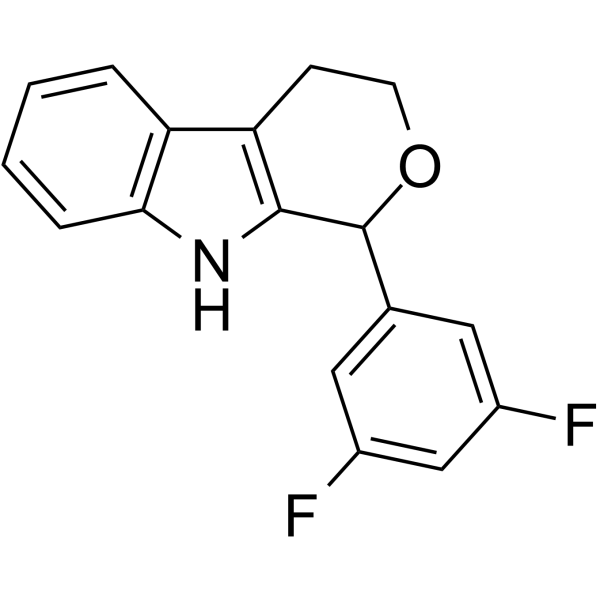
    PF-04979064 是一种有效的选择性 PI3K/mTOR 双重激酶抑制剂,抑制 PI3KαmTORKi 分别为 0.13 nM 和 1.42 nM。
    PF-04979064
  • HY-N0885
    Telocinobufagin

    远华蟾蜍精

    Inhibitor 99.93%
    Telocinobufagin (Telobufotoxin; Telocinobufogenin) 是一种口服有效的具有抗肿瘤活性的蟾蜍二烯内酯。Telocinobufagin 通过抑制 STAT3JAK2/STAT3LARP1-mTORPI3K/Akt/SnailPLK1 通路,分别发挥抗非小细胞癌、骨肉瘤、甲状腺癌、乳腺癌和头颈部鳞状细胞癌的作用,并可诱导肿瘤细胞凋亡 (apoptosis)。Telocinobufagin 可增强 Th1 免疫反应,并可预防鼠伤寒沙门氏菌感染。Telocinobufagin 通过抑制 Na+/K+-ATPase 的活性,具有强心作用,并可促进肾脏纤维化。Telocinobufagin 在各种急性疼痛模型中表现出非阿片类镇痛作用。
    Telocinobufagin
  • HY-146751
    PI3K/Akt/mTOR-IN-2 Inhibitor 99.93%
    PI3K/Akt/mTOR-IN-2 是一种有效的 PI3K/AKT/mTOR 抑制剂。PI3K/Akt/mTOR-IN-2 具有抗癌作用,并对 MDA-MB-231 细胞具有选择性,IC50 为 2.29 μM。PI3K/Akt/mTOR-IN-2 可诱导癌细胞周期阻滞和细胞凋亡 (apoptosis)。
    PI3K/Akt/mTOR-IN-2
  • HY-B0319
    Tioconazole

    噻康唑

    Inhibitor 99.90%
    Tioconazole (UK-20349) 是一种广谱性的抗真菌咪唑衍生物。Tioconazole 抑制几种皮肤真菌和几种酵母菌的 MIC50 分别小于 3.12 mg/L 和 9 mg/L,此外 Tioconazole 也具有抗寄生虫活性。Tioconazole 可通过抑制 PI3K/AKT/mTOR 信号通路和阻断自噬来发挥抗癌活性。Tioconazole 可用于抗感染和抗癌领域的研究。
    Tioconazole
  • HY-135827
    Roginolisib Inhibitor 99.66%
    Roginolisib (MSC2360844; IOA-244) 是一种有效的,具有口服活性的,选择性的 PI3Kδ 抑制剂,IC50为 145 nM。Roginolisib 对一组 278 种其他激酶显示出高度选择性。
    Roginolisib
  • HY-13334
    BGT226 maleate Inhibitor 99.92%
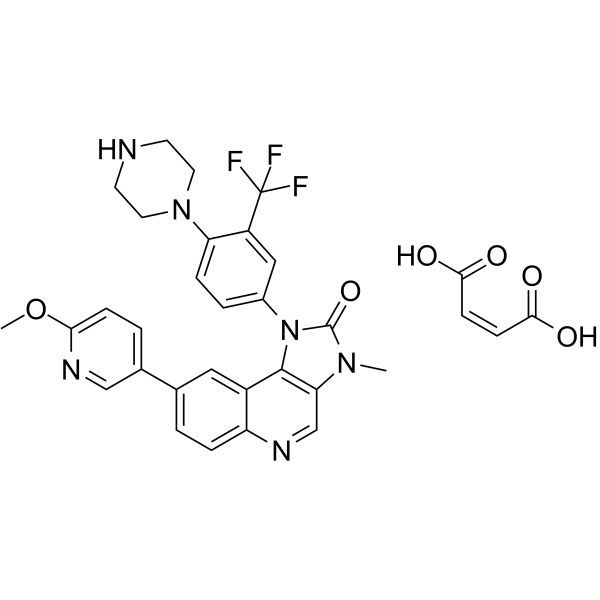
    BGT226 (NVP-BGT226 maleate) 是一种 PI3K (针对 PI3KαPI3KβPI3KγIC50分别是4 nM,63 nM,38 nM ) /mTOR 双抑制剂,对人头颈癌细胞具有较强的生长抑制活性。
    BGT226 maleate
  • HY-N0910
    Notoginsenoside Ft1

    三七皂苷FT1

    Inhibitor 99.49%
    Notoginsenoside Ft1 是一种口服有效的生物活性皂苷。Notoginsenoside Ft1 通过抑制 PI3K/AKT/mTOR 信号通路,激活 p38 MAPKERK1/2 信号通路,增加 CD8+ T 细胞比例,可诱导多种癌细胞凋亡 (apoptosis) 和溶酶体细胞死亡,并可促进血管生成。Notoginsenoside Ft1 通过激活内皮细胞中的糖皮质激素受体 (GR) 和雌激素受体 β (ERβ) 引起血管舒张。Notoginsenoside Ft1 通过激活一个由 P2Y12 受体介导的信号网络,增加细胞内 Ca2+ 积累,降低 cAMP 水平,促进血小板聚集,发挥促凝血作用。Notoginsenoside Ft1 通过激活 TGR5 受体,抑制肾小管上皮细胞铁死亡 (ferroptosis),从而显示出肾脏保护作用。Notoginsenoside Ft1 可作为 TGR5 激动剂和 FXR 拮抗剂抵抗肥胖和胰岛素抵抗。
    Notoginsenoside Ft1
  • HY-N0735
    Phellodendrine chloride

    盐酸黄柏碱

    Inhibitor 99.68%
    Phellodendrine chloride 是一种口服有效的生物碱。Phellodendrine chloride 能通过抑制巨胞饮作用 (macropinocytosis) 和谷氨酰胺代谢、诱导 ROS 积累和线粒体凋亡 (apoptosis) 来抑制 KRAS 突变的胰腺癌细胞的增殖。Phellodendrine chloride 通过激活 AMPK/mTOR 通路促进细胞自噬 (autophagy),减轻溃疡性结肠炎的肠道损伤。Phellodendrine chloride 通过抑制 IL-6/STAT3 信号通路,可缓解痛风性关节炎。Phellodendrine chloride 通过改变 MRGPRB3/MRGPRX2 蛋白的构象,从而抑制 PKC 的激活和下游的 MAPKNF-κB 信号传导,最终抑制过敏反应。Phellodendrine chloride 抑制 AKT/NF-κB 通路,下调 COX-2 表达,从而保护斑马鱼胚胎氧化应激。Phellodendrine chloride 通过下调 CHRM1HTR1API3K/Akt 信号通路,具有抗重度抑郁症 (MDD) 的作用。
    Phellodendrine chloride
  • HY-N0777
    Isorhamnetin-3-O-glucoside Activator 99.96%
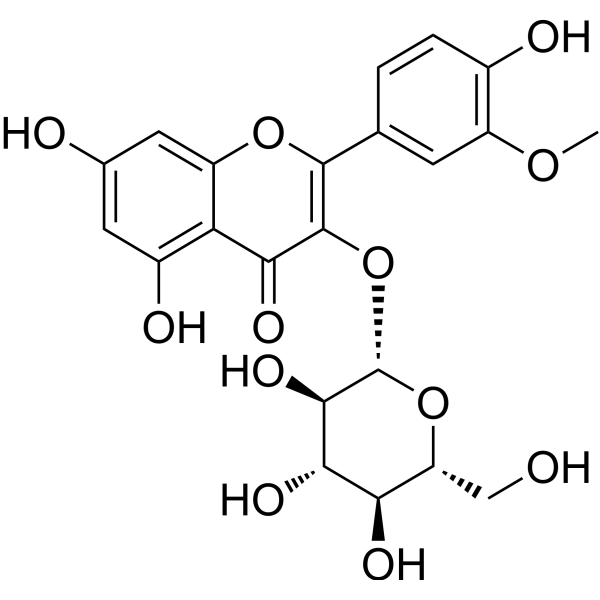
    Isorhamnetin-3-O-glucoside 是一种口服活性的天然化合物。Isorhamnetin 3-O-glucoside 可增加 P-ERKERKP-Akt (Ser473)P-PI3KPDX-1。Isorhamnetin 3-O-glucoside 可下调 C/EBPα 并抑制脂肪酶。Isorhamnetin 3-O-glucoside 可降低脂质并抑制肥胖。
    Isorhamnetin-3-O-glucoside
  • HY-N0660
    Jujuboside B

    酸枣仁皂苷B

    Inhibitor 99.92%
    Jujuboside B 是可以从酸枣仁 (Ziziphi Spinosae Semen) 中分离得到的一种具有生物活性的皂苷成分,具有口服有效性和血脑屏障通透性。Jujuboside B 可通过激活 RIPK1/RIPK3/MLKL 通路的方式诱导急性白血病细胞死亡,驱动坏死性凋亡 (Apoptosis)。Jujuboside B 通过上调 NOXAPARPcaspase-3 的表达,激活 AMPK,抑制乳腺癌细胞的增殖,诱导细胞凋亡和自噬 (Autophagy)。Jujuboside B 通过阻断 VEGFR-2 信号通路抑制血管生成和肿瘤生长。Jujuboside B 通过调控 Nrf2-STING 信号通路缓解小鼠肝损伤。Jujuboside B 通过调控抗炎反应、下调 11β-HSD2 表达,从而缓解肝脏损伤。Jujuboside B 通过非小细胞肺癌中的 PPARγ-ATF3-Gpx4 信号通路诱导铁死亡 (Ferroptosis) 并克服放疗抵抗。Jujuboside B 对血小板聚集的抑制作用。Jujuboside B 通过抑制 AMPA 受体活性抑制热性惊厥。Jujuboside B 通过阻断 PI3K/AktMAPK/ERK 通路并使 CREB 信号去磷酸化逆转慢性不可预知温和应激促进的肿瘤进展。Jujuboside B 可用于急性白血病、乳腺癌、PM2.5 诱导的肺损伤、肝毒性、肝损伤、结直肠癌、非小细胞肺癌、血栓栓塞性疾病、血小板高聚集相关心血管疾病、热性惊厥以及类抑郁表型的相关研究。
    Jujuboside B
  • HY-N2112
    Glaucocalyxin A

    蓝萼甲素

    Inhibitor 99.41%
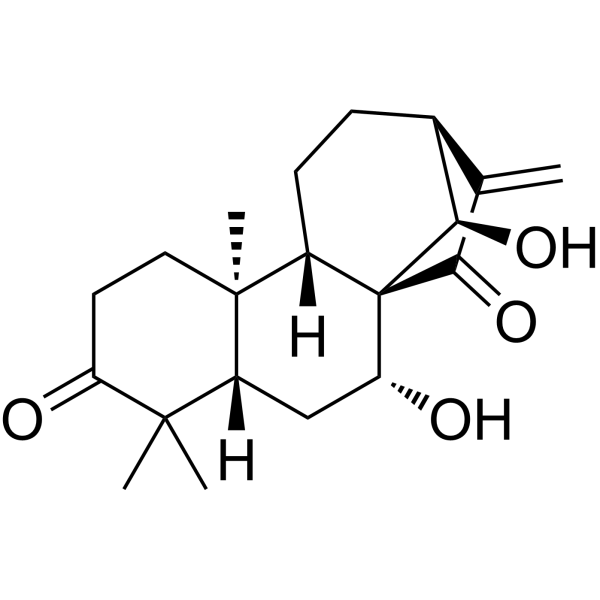
    Glaucocalyxin A,一种来自Rabdosia japonica var. 的对映型月桂基二萜,通过调节 PI3K/Akt 信号通路抑制 GLI1 的核易位,从而诱导骨肉瘤凋亡。Glaucocalyxin A 具有抗肿瘤作用。
    Glaucocalyxin A
  • HY-128741
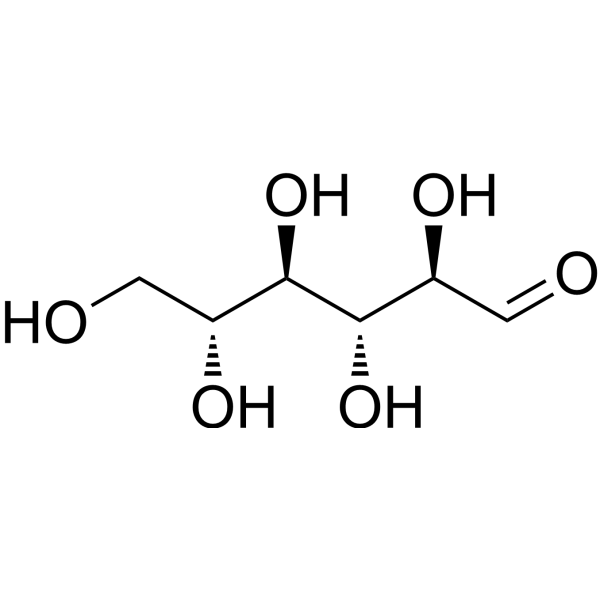
    D-Allose

    D-阿洛糖

    Inhibitor 99.85%
    D-Allose 对多种癌细胞具有抗肿瘤活性。D-Allose 能够清除活性氧 (ROS),并减少氧化应激损伤。D-Allose 通过抑制 TLR4/PI3K/AKT 信号通路发挥抗炎和神经保护作用。D-Allose 还具有抗高血压、抗冷冻和抗骨质疏松的活性。
    D-Allose
  • HY-107834
    PIK-75 Inhibitor 99.94%
    PIK-75 是一种可逆的 DNA-PKp110α-选择性的抑制剂,抑制 DNA-PK,p110α 和 p110γ,IC50 分别为 2,5.8 和 76 nM。PIK-75 抑制 p110α 效果比抑制 p110β (IC50=1.3 μM) 高 200 多倍。PIK-75 诱导凋亡 (apoptosis)。
    PIK-75
  • HY-106012
    PI4K-IN-1 Inhibitor 98.61%
    PI4K-IN-1 (compound 44) 是一种有效的 PI4KIII 抑制剂,PI4KIIIαPI4KIIIβpIC50 值分别为 9.0 和 6.6 。PI4K-IN-1 还抑制 PI3Kα/β/γ/δpIC50 值分别为 4.0/<3.7/5.0/<4.1。
    PI4K-IN-1
  • HY-109198
    Zandelisib Inhibitor 99.72%
    Zandelisib (ME-401) 是一种选择性的、口服活性的、非共价的 PI3Kδ 抑制剂。Zandelisib 可持续抑制 AKT 磷酸化及其下游信号通路。Zandelisib 可用于研究恶性肿瘤,如复发性/难治性 B 细胞淋巴瘤。
    Zandelisib
  • HY-100886
    BAY1082439 Inhibitor 99.35%
    BAY1082439 是一种具有口服活性的,选择性 PI3Kα/β/δ 抑制剂。BAY1082439 也能抑制 PIK3CA 的突变形式,BAY1082439 对抑制 Pten 丢失的前列腺癌的生长有很强的作用。
    BAY1082439
  • HY-N1431
    Tabersonine

    水甘草碱

    Inhibitor 98.13%
    Tabersonine 是一种选择性、口服有效的 NLRP3 抑制剂。Tabersonine 直接结合 NLRP3 的 NACHT 结构域,抑制其 ATP 酶活性及寡聚化,进而阻断 ASC 斑点形成和 caspase-1 激活,减少 IL-1β 等促炎细胞因子释放。Tabersonine 同时抑制 TRAF6 的 K63 连接泛素化,阻断 NF-κBPI3K/Aktp38 MAPK 信号通路。Tabersonine 可抑制炎症反应,通过线粒体通路和死亡受体通路诱导肝癌细胞凋亡 (apoptosis),降低线粒体膜电位、促进细胞色素 c 释放并激活 caspase 蛋白。Tabersonine 主要用于 NLRP3 驱动的炎症性疾病 (如急性肺损伤、败血症、腹膜炎) 及肝癌等肿瘤的研究。
    Tabersonine
  • HY-160099
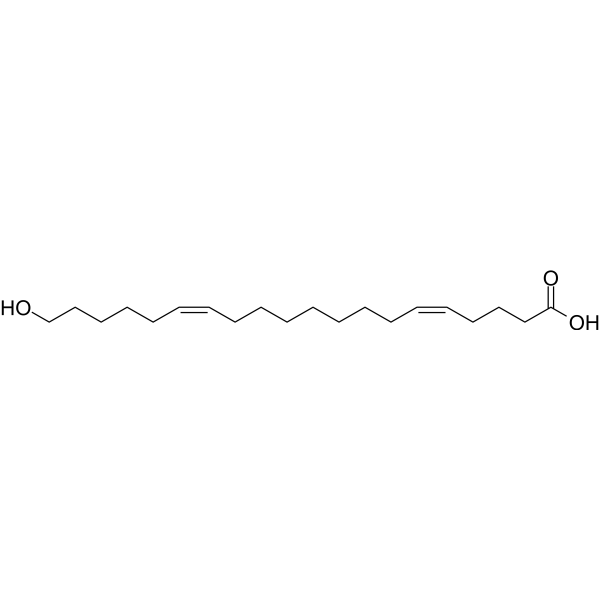
    20-5,14-HEDE Activator 98.34%
    20-5,14-HEDE (WIT003) 是 20-HETE 的类似物。20-5,14-HEDE 激活 PI3K/Akt 信号通路,从而发挥抗凋亡和促进细胞存活的作用。20-5,14-HEDE 是 20-HETE 的激动剂,可增加细胞内 Ca2+ 浓度,从而增强血管收缩。
    20-5,14-HEDE
  • HY-15837
    SAR-260301 Inhibitor 99.95%
    SAR-260301 是一种有效的,具有口服活性的选择性 PI3Kβ 抑制剂,IC50 为 23 nM。
    SAR-260301
  • HY-N0747
    Oxypeucedanin

    氧化前胡素

    Inhibitor 99.50%
    Oxypeucedanin 是可在 Angelica dahurica 中发现的呋喃香豆素衍生物。Oxypeucedanin 是一种具有口服活性的 PI3K/AKT/NF-κBMAPKROS 抑制剂。Oxypeucedanin 可诱导细胞周期阻滞和细胞凋亡 (apoptosis)。Oxypeucedanin 可抑制 hKv1.5 通道电流 (IC50: 76 nM)。Oxypeucedanin 具有抗癌、抗炎、抗氧化和抗心律失常活性。
    Oxypeucedanin
目录号 产品名 / 同用名 应用 反应物种

Phosphatidylinositol 3 kinases (PI3Ks) are a family of lipid kinases that integrate signals from growth factors, cytokines and other environmental cues, translating them into intracellular signals that regulate multiple signaling pathways. These pathways control many physiological functions and cellular processes, which include cell proliferation, growth, survival, motility and metabolism[1]


In the absence of activating signals, p85 interacts with p110 and inhibits p110 kinase activity. Following receptor tyrosine kinase (RTK) or G protein-coupled receptor (GPCR) activation, class I PI3Ks are recruited to the plasma membrane, where p85 inhibition of p110 is relieved and p110 phosphorylates PIP2 to generate PIP3. The activated insulin receptor recruits intracellular adaptor protein IRS1. Phosphorylation of IRS proteins on tyrosine residues by the insulin receptor initiates the recruitment and activation of PI3K. PIP3 acts as a second messenger which promotes the phosphorylation of Akt at Thr308 by PDK-1. RTK activation can also trigger Ras-Raf-MEK-ERK pathway. Activated Akt, ERK and RSK phosphorylate TSC2 at multiple sites to inhibit TSC1-TSC2-TBC1D7, which is the TSC complex that acts as a GTPase-activating protein (GAP) for the small GTPase RHEB. During inhibition of the TSC complex, GTP-loaded RHEB binds the mTOR catalytic domain to activate mTORC1. Glycogen synthase kinase 3β (GSK-3β) activates the TSC complex by phosphorylating TSC2 at Ser1379 and Ser1383. Phosphorylation of these two residues requires priming by AMPK-dependent phosphorylation of Ser1387. Wnt signaling inhibits GSK-3β and the TSC complex, and thus activates mTORC1. mTORC2 is activated by Wnt in a manner dependent on the small GTPase RAC1. Akt activation contributes to diverse cellular activities which include cell survival, growth, proliferation, angiogenesis, metabolism, and migration. Important downstream targets of Akt are GSK-3, FOXOs, BAD, AS160, eNOS, and mTOR. mTORC1 negatively regulates autophagy through multiple inputs, including inhibitory phosphorylation of ULK1, and promotes protein synthesis through activation of the translation initiation promoter S6K and through inhibition of the inhibitory mRNA cap binding 4E-BP1[1][2][3].


PI3Kδ is a heterodimeric enzyme, typically composed of a p85α regulatory subunit and a p110δ catalytic subunit. In T cells, the TCR, the costimulatory receptor ICOS and the IL-2R can activate PI3Kδ. In B cells, PI3Kδ is activated upon crosslinking of the B cell receptor (BCR). The BCR co-opts the co-receptor CD19 or the adaptor B cell associated protein (BCAP), both of which have YXXM motifs to which the p85α SH2 domains can bind. In lumphocytes, BTK and ITK contribute to the activation of PLCγ and promotes the generation of DAG and the influx of Ca2+, which in turn activate PKC and the CARMA1-, BCL 10- and MALT1 containing (CBM) complex. The resulting NF-κB inhibitor kinase (IKK) activation leads to the phosphorylation and the degradation of IκB, and to the nuclear accumulation of the p50-p65 NF-κB heterodimer. MyD88 is an adapter protein that mediates signal transduction for most TLRs and leads to activation of PI3K[4].


Reference:

[1]. Thorpe LM, et al. PI3K in cancer: divergent roles of isoforms, modes of activation and therapeutic targeting.Nat Rev Cancer. 2015 Jan;15(1):7-24. 
[2]. Vanhaesebroeck B, et al. PI3K signalling: the path to discovery and understanding.Nat Rev Mol Cell Biol. 2012 Feb 23;13(3):195-203. 
[3]. Fruman DA, et al. The PI3K Pathway in Human Disease.Cell. 2017 Aug 10;170(4):605-635.
[4]. Lucas CL, et al. PI3Kδ and primary immunodeficiencies.Nat Rev Immunol. 2016 Nov;16(11):702-714. 

Your Search Returned No Results.

Sorry. There is currently no product that acts on isoform together.

Please try each isoform separately.