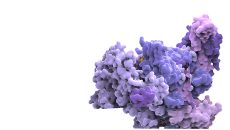
1. GPCR/G Protein Neuronal Signaling
  2. mGluR
  3. Basimglurant sulfate

Basimglurant sulfate  (Synonyms: RG7090 sulfate; RO4917523 sulfate)

目录号: HY-114515
一键复制产品信息
产品使用指南 技术支持

Basimglurant (RG7090; RO4917523) sulfate 是一种选择性的、口服有效的、可穿透血脑屏障的代谢型谷氨酸受体 5 (mGluR5) 负性变构调节剂,其 Ki 为 1.4 nM (对 [³H]-ABP688 (HY-110141)) 和 35.6 nM (对 [³H]-MPEP (HY-14609A))。Basimglurant sulfate 可抑制 mGlu5 介导的信号通路和受体组成型活性,调节伏隔核多巴胺水平,发挥抗焦虑、类抗抑郁、镇痛和促觉醒作用,并改变非快速眼动睡眠的 δ 波功率。Basimglurant sulfate 可用于抑郁症、脆性 X 综合征、焦虑症等研究。

MCE 的所有产品仅用作科学研究或药证申报,我们不为任何个人用途提供产品和服务

我们将采用定制合成服务的方式为您快速提供所需产品和技术服务

Basimglurant sulfate

Basimglurant sulfate Chemical Structure

CAS No. : 1034442-21-1

1.  客户无需承担相应的运输费用。

2.  同一机构(单位)同一产品试用装仅限申领一次,同一机构(单位)一年内

     可免费申领三个不同产品的试用装。

3.  试用装只面向终端客户

规格 是否有货
50 mg   询价  
100 mg   询价  
250 mg   询价  

* Please select Quantity before adding items.

Basimglurant sulfate 的其他形式现货产品:

Customer Review

Other Forms of Basimglurant sulfate:

MCE 顾客使用本产品发表的 1 篇科研文献

  • 生物活性

  • 纯度 & 产品资料

  • 参考文献

生物活性

Basimglurant (RG7090; RO4917523) sulfate is a selective, orally active, blood-brain barrier permeable negative allosteric modulator of metabotropic glutamate receptor 5 (mGluR5), with a Ki of 1.4 nM (against [3H]-ABP688 (HY-110141)) and 35.6 nM (against [3H]-MPEP (HY-14609A)). Basimglurant sulfate inhibits mGlu5-mediated signaling pathways and receptor constitutive activity, regulates dopamine levels in the nucleus accumbens, exerts anxiolytic, antidepressant-like, analgesic and arousal-promoting effects, and alters δ-wave power during non-rapid eye movement sleep. Basimglurant sulfate can be used in research on depression, fragile X syndrome, anxiety disorders, etc.[1][2]

体外研究
(In Vitro)

Basimglurant sulfate 在大鼠肝微粒体中代谢稳定性较低 (11 μL/min/mg),在人肝微粒体中稳定性良好 (CL <10 μL/min/mg)[1]
Basimglurant sulfate 在胚胎干细胞试验中无致畸潜力[1]
Basimglurant sulfate 可强效抑制 [3H]-MPEP 与人、小鼠及大鼠 mGlu5 受体的结合,其对三种受体的 Ki 值分别为 35.6 nM、29.5 nM 和 33.2 nM[2]
Basimglurant sulfate 可强效抑制人、小鼠和大鼠 mGlu5 表达型 HEK293 细胞中由使 Quisqualate 诱导的钙动员,其 IC50 值分别为 7.0 nM、8.88 nM 和 7.48 nM[2]
Basimglurant sulfate 可强效抑制 Quisqualate 诱导的表达人、小鼠和大鼠 mGlu5 的 HEK293 细胞中 IP 的积累,其 IC50 值分别为 5.85 nM、4.98 nM 和 5.93 nM;同时它可作为人 mGlu5 受体的反向激动剂,对应的 IC50 为 38.1 nM[2]

MCE has not independently confirmed the accuracy of these methods. They are for reference only.

药代动力学
(Parmacokinetics)
Species Dose Route Note Cmax Tmax AUC0-∞ Bioavailability CL Vss T1/2
Rat[1] 1 mg/kg i.v. / / / / / 5.9 mL/min/kg 4.0 L/kg 9.7 h
Rat[1] 10 mg/kg p.o. / 1580 ng/mL 6.2 h 25600 ng·h/mL 91 % / / /
Rat[1] 1.0 mg/kg i.v. / / / / / 9.1 mL/min/kg 5.1 L/kg 10 h
Cynomolgus Monkey[1] 0.3 mg/kg p.o. fasted 76.5 ng/mL 1.0 h 852 ng·h/mL ~100 % / / /
Cynomolgus Monkey[1] 0.3 mg/kg p.o. fed 36.1 ng/mL 2.0 h 298 ng·h/mL 54 % / / /
体内研究
(In Vivo)

Basimglurant (1-3 mg/kg;腹腔注射,每日给药,连续 21 天) sulfate 在慢性温和应激诱导快感缺失的大鼠中表现出显著的类抗抑郁活性[2]
Basimglurant (10-30 mg/kg;口服;24 小时内给药 3 次) sulfate 可在大鼠强迫游泳实验中产生类抗抑郁作用[2]
Basimglurant (1-30 mg/kg;口服;单次给药) sulfate 可在大鼠中诱导与典型抗抑郁药高度相似的脑活动模式[2]
Basimglurant (0.03-0.3 mg/kg;口服;单次给药) sulfate 在大鼠 Vogel 冲突试验中表现出类抗焦虑活性[2]
Basimglurant (0.01-1 mg/kg;口服;单次给药) sulfate 在小鼠应激诱导的体温过高试验中发挥抗焦虑作用[2]
Basimglurant (0.3-1 mg/kg;口服;单次给药) sulfate 在大鼠条件性情绪反应试验中表现出类抗焦虑活性[2]
Basimglurant (0.1-1 mg/kg;口服;单次给药) sulfate 在大鼠恐惧增强惊跳实验中产生类抗焦虑作用[2]
Basimglurant (10 mg/kg;口服;单次给药) sulfate 在小鼠福尔马林诱导疼痛模型的晚期阶段表现出镇痛活性[2]
Basimglurant (0.1-10 mg/kg;皮下注射;单次给药) sulfate 可剂量依赖性地抑制坐骨神经结扎大鼠的冷异常痛觉[2]
Basimglurant (0.03-0.3 mg/kg;静脉注射;单次给药) sulfate 可剂量依赖性地提高麻醉大鼠的排尿阈值容量[2]
Basimglurant (0.01-0.03 mg/kg;静脉注射;单次给药) sulfate 可强效降低麻醉大鼠的膀胱收缩频率[2]
basimglurant (0.03-0.3 mg/kg;口服;每日一次;连续 5 天) sulfate 可在挪威大鼠的活动暗期产生剂量依赖性的促觉醒作用,减少快速眼动 (REM) 睡眠和非快速眼动 (non-REM) 睡眠,延长睡眠潜伏期,并增强非快速眼动睡眠的 δ 波功率[2]

MCE has not independently confirmed the accuracy of these methods. They are for reference only.

Animal Model: Wistar rats (male, 350 g, chronic mild stress-induced anhedonia model with unilateral ventral tegmental area electrode implantation)[2]
Dosage: 1 mg/kg; 3 mg/kg
Administration: i.p.; daily; 21 days
Result: Reduced the anhedonia index by -72% (day 35), -53% (day 39), and -64% (day 42) compared to vehicle-treated stressed rats at 3 mg/kg, normalizing values to pre-stress baseline levels.
Reduced the anhedonia index significantly with consistent effects across the treatment period at 1 mg/kg.
Had no significant effect on anhedonia index in unstressed rats.
Animal Model: Wistar rats (female, 100-130 g, forced swim test model)[2]
Dosage: 10 mg/kg; 30 mg/kg
Administration: p.o.; 3 doses over 24 hours (24 h, 16 h, 2 h pre-test)
Result: Reduced immobility time by -19% at 10 mg/kg and -16% at 30 mg/kg compared to vehicle-treated rats.
Animal Model: Fischer F344 rats (male, ~250 g, fMRI-based brain activity profiling model)[2]
Dosage: 1 mg/kg; 10 mg/kg; 30 mg/kg
Administration: p.o.; single dose; 1 hour pre-fMRI imaging
Result: Increased perfusion in the dorsal striatum and decreased perfusion in the medial prefrontal cortex, dorsal hippocampus, thalamus, hypothalamus, septum, nucleus accumbens, ventral pallidum, and entorhinal piriform cortex at 1 mg/kg.
Amplified the perfusion changes observed at 1 mg/kg at 10 mg/kg.
Showed a pattern match coefficient (PMC) of >0.71 compared to prototypical antidepressants including duloxetine, reboxetine, imipramine, bupropion, and electroconvulsive treatment (ECT) at 1 and 10 mg/kg.
Surpassed the root mean square (RMS) response strength of ECT and standard antidepressants at 30 mg/kg at 1 and 10 mg/kg.
Animal Model: Sprague Dawley rats (male, 190-210 g, Vogel conflict drinking test model)[2]
Dosage: 0.03 mg/kg; 0.1 mg/kg; 0.3 mg/kg
Administration: p.o.; single dose; 1 hour pre-test
Result: Increased punished drinking time by +165% at 0.03 mg/kg, with further increases at higher doses, reaching significance at all tested doses compared to vehicle.
Animal Model: NMRI mice (male, ~22 g, stress-induced hyperthermia model)[2]
Dosage: 0.01 mg/kg; 0.1 mg/kg; 1 mg/kg
Administration: p.o.; single dose; 1 hour pre-test
Result: Reduced stress-induced hyperthermia by -48% at 0.01 mg/kg, -73% at 0.1 mg/kg, and -145% at 1 mg/kg compared to vehicle, with all doses producing significant effects.
Animal Model: Sprague Dawley rats (male, 350 g, conditioned emotional response model)[2]
Dosage: 0.3 mg/kg; 1 mg/kg
Administration: p.o.; single dose; 1 hour pre-test
Result: Increased the suppression ratio by +567% at 0.3 mg/kg and +583% at 1 mg/kg compared to vehicle, indicating reduced fear response.
Animal Model: Sprague Dawley rats (male, 225-287 g, fear-potentiated startle model)[2]
Dosage: 0.1 mg/kg; 1 mg/kg
Administration: p.o.; single dose; 1 hour pre-test
Result: Reduced fear-potentiated startle amplitude by -53% at 0.1 mg/kg and -94% at 1 mg/kg compared to vehicle, with significant effects at both doses.
Animal Model: NMRI mice (male, 24-30 g, formalin-induced paw licking model, late phase)[2]
Dosage: 1 mg/kg; 10 mg/kg
Administration: p.o.; single dose; 40 minutes pre-formalin injection
Result: Reduced paw licking time by -91% (non-significant) at 1 mg/kg and -95% (significant) at 10 mg/kg compared to vehicle in the late phase of formalin-induced pain.
Had no significant effect in the early phase at any tested dose.
Animal Model: Sprague Dawley rats (female, 100-250 g, Bennett model of cold allodynia with sciatic nerve constriction injury)[2]
Dosage: 0.1 mg/kg; 0.3 mg/kg; 1 mg/kg; 3 mg/kg; 10 mg/kg
Administration: s.c.; single dose; 60 minutes pre-test
Result: Increased the inhibition rate of cold allodynia by 28% at 0.1 mg/kg, 37% at 0.3 mg/kg, 50% at 1 mg/kg, 39% at 3 mg/kg, and 58% at 10 mg/kg compared to vehicle.
Produced significant effects at all doses, with maximal efficacy comparable to morphine (64% inhibition rate) and duloxetine (56% inhibition rate).
Animal Model: Sprague Dawley rats (female, 200-250 g, volume-induced micturition reflex model with cannulated bladders, anesthetized)[2]
Dosage: 0.03 mg/kg; 0.3 mg/kg
Administration: i.v.; single dose
Result: Increased the micturition threshold volume by +27% at 0.03 mg/kg and +166.9% at 0.3 mg/kg compared to baseline, with significant effects at both doses.
Animal Model: Sprague Dawley rats (female, 200-250 g, isovolumetric bladder contraction model with cannulated bladders, anesthetized)[2]
Dosage: 0.01 mg/kg; 0.03 mg/kg
Administration: i.v.; single dose
Result: Reduced bladder contraction frequency by -88.5% at 0.01 mg/kg and -79.9% at 0.03 mg/kg compared to vehicle, with maximal effects comparable at both doses.
Animal Model: Sprague Dawley rats (male, 275-325 g, telemetric EEG/EMG recording model in freely moving rats)[2]
Dosage: 0.03 mg/kg; 0.1 mg/kg; 0.3 mg/kg
Administration: p.o.; daily; 5 days, administered at ZT 14
Result: Reduced the REM/non-REM sleep ratio during the dark phase by up to 67% at 0.3 mg/kg.
Reduced time spent in REM sleep by up to 100% (0.1 mg/kg) and non-REM sleep by up to 94% (0.1 mg/kg) during the dark phase.
Increased latency to REM sleep onset by up to +351% and non-REM sleep onset by up to +226% at 0.3 mg/kg.
Increased wakefulness by up to 136% (0.3 mg/kg) and locomotor activity by up to +200% (0.3 mg/kg) during the dark phase, with no subsequent hypersomnolence.
Increased delta power by up to +307% at 0.3 mg/kg during non-REM sleep in the dark phase, an effect that persisted into the light phase.
分子量

423.85

Formula

C18H15ClFN3O4S

CAS 号
运输条件

Room temperature in continental US; may vary elsewhere.

储存方式

Please store the product under the recommended conditions in the Certificate of Analysis.

纯度 & 产品资料
参考文献
  • 摩尔计算器

  • 稀释计算器

The molarity calculator equation

Mass (g) = Concentration (mol/L) × Volume (L) × Molecular Weight (g/mol)

质量   浓度   体积   分子量 *
= × ×

The dilution calculator equation

Concentration (start) × Volume (start) = Concentration (final) × Volume (final)

This equation is commonly abbreviated as: C1V1 = C2V2

浓度 (start) × 体积 (start) = 浓度 (final) × 体积 (final)
× = ×
C1   V1   C2   V2
Help & FAQs
  • Do most proteins show cross-species activity?

    Species cross-reactivity must be investigated individually for each product. Many human cytokines will produce a nice response in mouse cell lines, and many mouse proteins will show activity on human cells. Other proteins may have a lower specific activity when used in the opposite species.

您最近查看的产品:

Your information is safe with us. * Required Fields.

   产品名称:


* 需求量:

* 客户姓名:


* Email:

* 电话:


* 公司或机构名称:

   留言给我们:

Bulk Inquiry

Inquiry Information

产品名称:
Basimglurant sulfate
目录号:
HY-114515
需求量: