201733-56-4 (联硼酸新戊二醇酯,Bis(neopentyl glycolato)diboron)

CAS号:
201733-56-4
中文名称:
联硼酸新戊二醇酯
英文名称:
Bis(neopentyl glycolato)diboron
安全信息:
分子式:
C10H20B2O4
分子量:
225.885403633118

联硼酸新戊二醇酯(201733-56-4)名称与标识符

名称

中文别名:
联硼酸新戊二醇酯;双(新戊基乙二醇)二硼;Bis(neopentyl Glycolato)diboron 双(新戊基乙二醇)二硼;联硼酸新戊二醇脂;5,5,5',5'-四甲基-2,2'-二-1,3,2-二氧杂硼烷;5,5,5',5'-四甲基-2,2'-联-1,3,2-二氧杂硼烷;双(2,2-二甲基-1,3-丙二醇)二硼;双(新戊基乙二醇)二硼5,5,5′,5′-四甲基-2,2′-二-1,3,2-二氧杂硼烷双(2,2-二甲基-1,3-丙二醇)二硼;双联新戊二醇二硼酸酯;双新戊基甘油二硼酯;5,5,5′,5′-四甲基-2,2′-二-1,3,2-二氧杂硼烷;
英文别名:
5,5,5',5'-Tetramethyl-2,2'-bi(1,3,2-dioxaborinane);5,5,5,5-Tetramethyl-2,2-bi-1,3,2-dioxaborinane;bis(neopentyl glycolato)diboron;2-(5,5-dimethyl-1,3,2-dioxaborinan-2-yl)-5,5-dimethyl-1,3,2-dioxaborinane;BIS(2,2-DIMETHYL-1,3-PROPANEDIOLATO)DIBORON;2,2'-Bi-1,3,2-dioxaborinane,5,5,5',5'-tetramethyl;5,5,5',5'-tetramethyl-[2,2']bi[[1,3,2]dioxaborinanyl];5,5,5',5'-Tetramethyl-2,2'-bi-1,3,2-dioxaborinane;5,5,5’,5‘-Tetramethyl-2,2’-bi-1,3,2-dioxaborinane;bis(neopentanediolato)diboron;Bis(neopentylglycolato)diboron;Bis(neopentylglycolato) diboron;2,2'-Bi-1,3,2-dioxaborinane, 5,5,5',5'-tetramethyl-;Bis(neopentyl glycolato)diboron, 98%;PubChem7775;KSC923Q4R;bis(neopentanediol;bis-(neopentyl glycolato)diboron;201733-56-4;J-519886;bis(neopentylglycolato)-diboron;BIS(NEOPENTYL GLYCOLATO)DIBORANE;SCHEMBL449902;SY012214;5,5,5',5'-tetramethyl-[2,2']bi[1,3,2]dioxaborinanyl;FT-0623077;AB10739;bis-(neopentyl glycolato)diborane;MDNDJMCSXOXBFZ-UHFFFAOYSA-N;EN300-200601;TU2GUX2HET;EC 639-407-9;B2254;UNII-TU2GUX2HET;Bis(neopentyl glycolato)diboron, 96%;NS00005420;AC-1754;DTXSID70370207;AM62753;CS-W009029;J-013089;2-(5,5-dimethyl-1,3,2-dioxaborinan-2-yl)-5,5-dimethyl-1,3,2-dioxaborinane;5,5,5',5'-Tetramethyl-2,2'-bi(1,3,2-dioxaborinane);C10H20B2O4;A814300;AKOS015842114;MFCD02093062;AS-2636;5,5,5',5'-Tetramethyl-2,2'-bi-1,3,2-dioxaborinane; Bis(neopentanediolato)diboron;;DB-016087;

标识符

MDL:
MFCD02093062
InChIKey:
MDNDJMCSXOXBFZ-UHFFFAOYSA-N
Inchi:
1S/C10H20B2O4/c1-9(2)5-13-11(14-6-9)12-15-7-10(3,4)8-16-12/h5-8H2,1-4H3
SMILES:
O1B(B2OCC(C)(C)CO2)OCC(C)(C)C1
BRN:
8839038

联硼酸新戊二醇酯(201733-56-4)物化性质

实验特性

  • LogP : 1.18720
  • PSA : 36.92000
  • 折射率 : 1.427
  • 沸点 : 214.3°C at 760 mmHg
  • 熔点 : 186.0 to 193.0 deg-C
  • 闪点 : 83.4℃
  • 颜色与性状 : 白色晶体状的粉末
  • 溶解性 : 未确定
  • 敏感性 : moisture sensitive
  • 密度 : 0.99

计算特性

  • 精确分子量 : 226.15500
  • 氢键供体数量 : 0
  • 氢键受体数量 : 4
  • 可旋转化学键数量 : 1
  • 同位素质量 : 226.155
  • 重原子数量 : 16
  • 复杂度 : 211
  • 同位素原子数量 : 0
  • 确定原子立构中心数量 : 0
  • 不确定原子立构中心数量 : 0
  • 确定化学键立构中心数量 : 0
  • 不确定化学键立构中心数量 : 0
  • 共价键单元数量 : 1
  • 疏水参数计算参考值(XlogP) : 无
  • 互变异构体数量 : 无
  • 表面电荷 : 0
  • 拓扑分子极性表面积 : 36.9

联硼酸新戊二醇酯(201733-56-4)国际标准相关数据

EINECS:
000-000-0

联硼酸新戊二醇酯(201733-56-4)推荐厂家 更多厂家(70)

联硼酸新戊二醇酯(201733-56-4)参考资料

Reaxys RN:
8839038
Beilstein:
8839038
PubChem CID:

联硼酸新戊二醇酯(201733-56-4) MSDS

基础信息

Name:Bis(Neopentyl Glycolato)Diboron Material Safety Data Sheet
Synonym:None Known
CAS:201733-56-4
Section 1 - Chemical Product ? MSDS Name:Bis(Neopentyl Glycolato)Diboron Material Safety Data Sheet
Synonym:None Known

Section 2 - COMPOSITION, INFORMATION ON INGREDIENTS
CAS#Chemical NamecontentEINECS#
201733-56-4Bis(Neopentyl Glycolato)Diboronca. 100unlisted
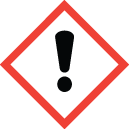
Hazard Symbols: XI
Risk Phrases: 36/37/38

Section 3 - HAZARDS IDENTIFICATION
? EMERGENCY OVERVIEW
Irritating to eyes, respiratory system and skin.
Potential Health Effects
Eye:
Causes eye irritation. May cause chemical conjunctivitis.
Skin:
Causes skin irritation.
Ingestion:
May cause gastrointestinal irritation with nausea, vomiting and diarrhea.
Inhalation:
Causes respiratory tract irritation. Can produce delayed pulmonary edema.
Chronic:
Effects may be delayed.

Section 4 - FIRST AID MEASURES
? Eyes: Immediately flush eyes with plenty of water for at least 15 minutes, occasionally lifting the upper and lower eyelids. Get medical aid.
Skin:
Get medical aid. Flush skin with plenty of water for at least 15 minutes while removing contaminated clothing and shoes. Wash clothing before reuse.
Ingestion:
Never give anything by mouth to an unconscious person. Get medical aid. Do NOT induce vomiting. If conscious and alert, rinse mouth and drink 2-4 cupfuls of milk or water. Wash mouth out with water.
Inhalation:
Remove from exposure and move to fresh air immediately. If not breathing, give artificial respiration. If breathing is difficult, give oxygen. Get medical aid. Do NOT use mouth-to-mouth resuscitation.
Notes to Physician:
Treat symptomatically and supportively.

Section 5 - FIRE FIGHTING MEASURES
? General Information:
As in any fire, wear a self-contained breathing apparatus in pressure-demand, MSHA/NIOSH (approved or equivalent), and full protective gear. During a fire, irritating and highly toxic gases may be generated by thermal decomposition or combustion.
Extinguishing Media:
Use water spray, dry chemical, carbon dioxide, or chemical foam.

Section 6 - ACCIDENTAL RELEASE MEASURES
? General Information: Use proper personal protective equipment as indicated in Section 8.
Spills/Leaks:
Vacuum or sweep up material and place into a suitable disposal container. Clean up spills immediately, observing precautions in the Protective Equipment section. Avoid generating dusty conditions.
Provide ventilation.

Section 7 - HANDLING and STORAGE
? Handling:
Avoid breathing dust, vapor, mist, or gas. Avoid contact with eyes, skin, and clothing. Keep container tightly closed. Avoid ingestion and inhalation. Use with adequate ventilation. Wash clothing before reuse.
Storage:
Store in a tightly closed container. Store in a dry area. Keep refrigerated. (Store below 4C/39F.)

Section 8 - EXPOSURE CONTROLS, PERSONAL PROTECTION
? Engineering Controls:
Facilities storing or utilizing this material should be equipped with an eyewash facility and a safety shower. Use adequate ventilation to keep airborne concentrations low.
Exposure Limits CAS# 201733-56-4: Personal Protective Equipment Eyes: Wear appropriate protective eyeglasses or chemical safety goggles as described by OSHA's eye and face protection regulations in 29 CFR 1910.133 or European Standard EN166.
Skin:
Wear appropriate protective gloves to prevent skin exposure.
Clothing:
Wear appropriate protective clothing to prevent skin exposure.
Respirators:
Follow the OSHA respirator regulations found in 29 CFR 1910.134 or European Standard EN 149. Use a NIOSH/MSHA or European Standard EN 149 approved respirator if exposure limits are exceeded or if irritation or other symptoms are experienced.

Section 9 - PHYSICAL AND CHEMICAL PROPERTIES
?
Physical State: Solid
Color: Not available.
Odor: Not available.
pH: Not available.
Vapor Pressure: Not available.
Viscosity: Not available.
Boiling Point: Not available.
Freezing/Melting Point: 180.5 - 184.5 deg C
Autoignition Temperature: Not available.
Flash Point: Not available.
Explosion Limits, lower: Not available.
Explosion Limits, upper: Not available.
Decomposition Temperature:
Solubility in water:
Specific Gravity/Density:
Molecular Formula: C10H20B2O4
Molecular Weight: 225.88

Section 10 - STABILITY AND REACTIVITY
? Chemical Stability:
Stable at room temperature in closed containers under normal storage and handling conditions.
Conditions to Avoid:
Light, dust generation, excess heat.
Incompatibilities with Other Materials:
Oxidizing agents, acids, strong bases.
Hazardous Decomposition Products:
Carbon monoxide, carbon dioxide, boron oxides.
Hazardous Polymerization: Will not occur.

Section 11 - TOXICOLOGICAL INFORMATION
? RTECS#:
CAS# 201733-56-4 unlisted.
LD50/LC50:
Not available.
Carcinogenicity:
Bis(Neopentyl Glycolato)Diboron - Not listed by ACGIH, IARC, or NTP.

Section 12 - ECOLOGICAL INFORMATION
?

Section 13 - DISPOSAL CONSIDERATIONS
? Dispose of in a manner consistent with federal, state, and local regulations.

Section 14 - TRANSPORT INFORMATION
?
IATA
Not regulated as a hazardous material.
IMO
Not regulated as a hazardous material.
RID/ADR
Not regulated as a hazardous material.

Section 15 - REGULATORY INFORMATION
?
European/International Regulations
European Labeling in Accordance with EC Directives
Hazard Symbols: XI
Risk Phrases:
R 36/37/38 Irritating to eyes, respiratory system
and skin.
Safety Phrases:
S 26 In case of contact with eyes, rinse immediately
with plenty of water and seek medical advice.
S 37/39 Wear suitable gloves and eye/face
protection.
WGK (Water Danger/Protection)
CAS# 201733-56-4: No information available.
Canada
None of the chemicals in this product are listed on the DSL/NDSL list.
CAS# 201733-56-4 is not listed on Canada's Ingredient Disclosure List.
US FEDERAL
TSCA
CAS# 201733-56-4 is not listed on the TSCA inventory.
It is for research and development use only.


SECTION 16 - ADDITIONAL INFORMATION
N/A