1. Signaling Pathways
  2. PI3K/Akt/mTOR
  3. mTOR

mTOR (哺乳动物雷帕霉素靶蛋白)

Mammalian target of Rapamycin

mTOR(哺乳动物雷帕霉素靶蛋白)是一种由人类 mTOR 基因编码的蛋白质。mTOR 是一种丝氨酸/苏氨酸蛋白激酶,可调节细胞生长、细胞增殖、细胞运动、细胞存活、蛋白质合成和转录。mTOR 属于磷脂酰肌醇 3-激酶相关激酶蛋白家族。mTOR 整合上游通路的输入,包括生长因子和氨基酸。mTOR 还能感知细胞营养、氧气和能量水平。mTOR 通路在人类疾病中失调,例如糖尿病、肥胖症、抑郁症和某些癌症。雷帕霉素通过与其细胞内受体 FKBP12 结合来抑制 mTOR。FKBP12-雷帕霉素复合物直接与 mTOR 的 FKBP12-雷帕霉素结合 (FRB) 域结合,从而抑制其活性。

mTOR (mammalian target of Rapamycin) is a protein that in humans is encoded by the mTOR gene. mTOR is a serine/threonine protein kinase that regulates cell growth, cell proliferation, cell motility, cell survival, protein synthesis, and transcription. mTOR belongs to the phosphatidylinositol 3-kinase-related kinase protein family. mTOR integrates the input from upstream pathways, including growth factors and amino acids. mTOR also senses cellular nutrient, oxygen, and energy levels. The mTOR pathway is dysregulated in human diseases, such as diabetes, obesity, depression, and certain cancers. Rapamycin inhibits mTOR by associating with its intracellular receptor FKBP12. The FKBP12-rapamycin complex binds directly to the FKBP12-Rapamycin Binding (FRB) domain of mTOR, inhibiting its activity.

Cat. No. Product Name Effect Purity Chemical Structure
  • HY-144295
    PI3Kα-IN-5 Inhibitor
    PI3Kα-IN-5 (compound 6 ab) 是一种有效的 PI3Kα/mTOR 抑制剂,IC50 值分别为 0.7 nM 和 3.3 nM。PI3Kα-IN-5 可用于结直肠癌的研究。
    PI3Kα-IN-5
  • HY-181925
    FD2024 Inhibitor
    FD2024 是一种泛 PIM 激酶抑制剂,对 PIM-1PIM-2PIM-3IC50 值分别为 0.17 nM、1.86 nM 和 0.38 nM。FD2024 可诱导细胞发生凋亡 (Apoptosis)。FD2024 抑制 mTORp70S6KS64EBP1BAD 蛋白的磷酸化。FD2024 表现出抗急性髓系白血病活性。FD2024 可用于急性髓系白血病的相关研究。
    FD2024
  • HY-138976
    NV-5440 Inhibitor
    NV-5440 (Compound I-120) 是一种 mTORC1 抑制剂和葡萄糖转运蛋白 (glucose transporter) 抑制剂。NV-5440 靶向 GLUT-1-2-3-4,且对 GLUT-5 无活性。NV-5440 可抑制葡萄糖摄取。
    NV-5440
  • HY-180056
    CAII-IN-12 Inhibitor
    CAII-IN-12 (compound 6c) 是一种高效且选择性的碳酸酐酶 (CA) IIVII 抑制剂 (hCA II Ki = 47.8 nM,hCA VII Ki = 3.6 nM),具有抗癫痫活性。CAII-IN-12 对 hCA I 具有选择性 (Ki = 370 nM)。CAII-IN-12 在 Pentylenetetrazol 和 Pilocarpine (HY-B0726A) 诱导的小鼠癫痫模型中均表现出强效的抗惊厥活性。CAII-IN-12 可增加海马体中 KCC2 的表达,维持神经元完整性,并降低 mTOR 活性。CAII-IN-12 可用于癫痫研究。
    CAII-IN-12
  • HY-144449
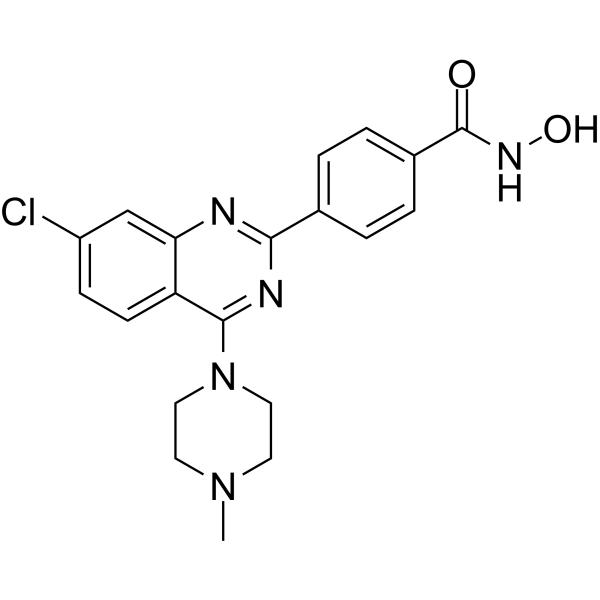
    mTOR/HDAC6-IN-1 Inhibitor
    mTOR/HDAC6-IN-1 是一种有效的哺乳动物雷帕霉素 (mTOR) 和组蛋白去乙酰酶 (HDAC6) 的双重抑制剂 (mTORHDAC6IC50s 分别为 133.7 nM 和 56 nM)。mTOR/HDAC6-IN-1 可诱导明显的细胞自噬 (autophagy)、细胞凋亡 (apoptosis),以及抑制迁移。mTOR/HDAC6-IN-1 具有研究三阴性乳腺癌 (TNBC) 的潜力。
    mTOR/HDAC6-IN-1
  • HY-121726
    3HOI-BA-01 Inhibitor
    3HOI-BA-01 是 mTOR 抑制剂。3HOI-BA-01在小鼠心肌缺血/再灌注损伤模型中减少梗死面积并诱导自噬 (autophagy) 。
    3HOI-BA-01
  • HY-181099
    EGFR WT/T790M-IN-4 Inhibitor
    EGFR WT/T790M-IN-4 是一种抗癌剂。EGFR WT/T790M-IN-4 是 EGFRWT EGFRT790M 的抑制剂,IC50 为 0.133 μM 和 0.043 μM。EGFR WT/T790M-IN-4 也可抑制 PI3KmTOR 激酶,其 IC50 值分别为 0.22 μM 和 0.35 μM。EGFR WT/T790M-IN-4 能诱导癌细胞周期阻滞和凋亡 (apoptosis),抑制癌细胞增殖。EGFR WT/T790M-IN-4 可用于前列腺癌、结肠癌、乳腺癌的相关研究。
    EGFR WT/T790M-IN-4
  • HY-144686
    ATM Inhibitor-3 Inhibitor
    ATM Inhibitor -3 (化合物 34) 是一种强效的选择性 ATM 抑制剂,其 IC50 为 0.71 nM。ATM Inhibitor-3 对 PI3K 激酶家族有抑制作用。ATM Inhibitor-3 具有良好的代谢稳定性。
    ATM Inhibitor-3
  • HY-P11656
    α-Neoendorphin (porcine) Modulator
    α-Neoendorphin porcine 是一种肽。α-Neoendorphin porcine 可通过激活 mTOR-Beclin-1 介导的细胞自噬 (autophagy),减少 UVB 诱导的 ROS 生成、抑制 MAPK 通路及 MMP 活性并提升 I 型前胶原合成,从而有效缓解 UVB 引发的皮肤光老化。α-Neoendorphin porcine 对皮肤细胞具有抗衰老和抗皱作用。α-Neoendorphin porcine 可用于皮肤光老化相关研究。
    α-Neoendorphin (porcine)
  • HY-152238
    PI3K/mTOR Inhibitor-12 Inhibitor
    PI3K/mTOR Inhibitor-12 是一种口服有效的选择性 PI3K/mTOR 抑制剂,对 PI3KαmTORIC50 值分别为 0.06 nM 和 3.12 nM。PI3K/mTOR Inhibitor-12 具有抗肿瘤活性。PI3K/mTOR Inhibitor-12 具有较低的肝毒性。
    PI3K/mTOR Inhibitor-12
  • HY-P5984A
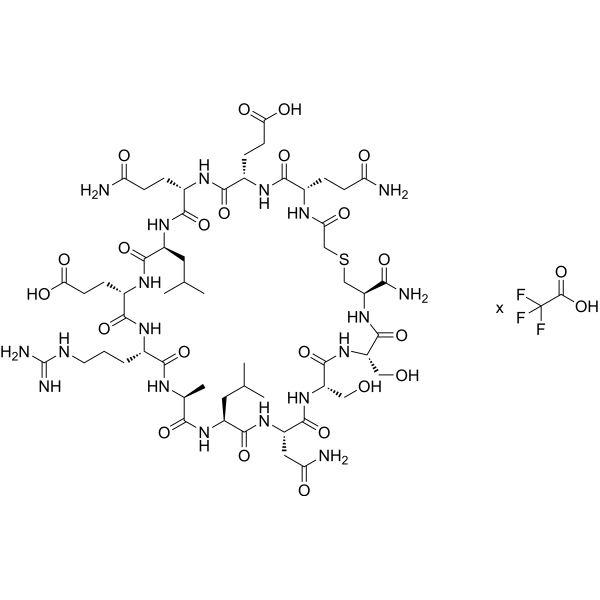
    Thioether-cyclized helix B peptide, CHBP TFA Inhibitor
    Thioether-cyclized helix B peptide, CHBP (TFA) 是 Thioether-cyclized helix B peptide, CHBP (HY-P5984) 的 TFA 形式。Thioether-cyclized helix B peptide, CHBP (TFA) 可通过抑制 mTORC1 和激活 mTORC2 诱导自噬 (autophagy),从而提高代谢稳定性和肾脏保护作用。
    Thioether-cyclized helix B peptide, CHBP TFA
  • HY-13610
    N1,N11-Diethylnorspermine

    二乙基去甲精胺

    Inhibitor
    N1,N11-Diethylnorspermine 是一种人工合成的精胺类似物,可以诱导多胺耗竭并抑制肿瘤细胞生长。N1,N11-Diethylnorspermine 激活多胺分解代谢,减少 mTOR 蛋白。N1,N11-Diethylnorspermine 诱导线粒体释放细胞色素 c,导致 caspase 3 的激活。N1,N11-Diethylnorspermine 通过诱导亚精胺/精胺 N1-乙酰转移酶 (SSAT) 结合产生过氧化氢杀灭多形胶质母细胞瘤 (GBM) 。
    N1,N11-Diethylnorspermine
  • HY-179623
    PI3Kα-IN-29 Inhibitor
    PI3Kα-IN-29 是一种高效的、口服有效且选择性的 PI3Kα 抑制剂,IC50 值为 2.5 nM。PI3Kα-IN-29 对 PI3Kβ/δ/γ/mTOR 的选择性超过 400 倍。PI3Kα-IN-29 可选择性降解 H1047R 突变型 p110α 蛋白,并抑制 PI3Kα 激酶活性。PI3Kα-IN-29 可抑制 PI3K/AKT/mTOR 信号通路,诱导 G1 期阻滞,并抑制细胞迁移。PI3Kα-IN-29 可抑制 T47 小鼠模型中的肿瘤生长。PI3Kα-IN-29 可用于乳腺癌的研究。
    PI3Kα-IN-29
  • HY-155721
    22-(4′-py)-JA Inhibitor
    22-(4′-py)-JA 是久那霉素 A (JA) 的半合成衍生物,能够从泰国蓝海绵 (Xestospongia sp.) 中分离得到。22-(4′-py)-JA 具有抗转移活性,能够抑制 AKT/mTOR/p70S6K 信号传导。22-(4′-py)-JA 抑制人脐静脉内皮细胞 (HUVEC) 中的肿瘤细胞侵袭和管形成,下调金属蛋白酶(MMP-2 和 MMP-9)、缺氧诱导因子 1α (HIF-1α) 和血管内皮生长因子 (VEGF)。22-(4′-py)-JA 对非小细胞肺癌 (NSCLC) 具有有效抗癌活性。
    22-(4′-py)-JA
  • HY-182048
    PD-1/PD-L1-IN-62 Modulator
    PD-1/PD-L1-IN-62 是一种 PD-L1 抑制剂和 mTOR 调节剂。PD-1/PD-L1-IN-62 抑制 PD-L1 IC50 为 6.9 nM,并解除 PD-1/PD-L1 通路介导的免疫抑制。PD-1/PD-L1-IN-62 通过抑制 mTOR 磷酸化并下调下游靶点 SREBP1,显著降低胆固醇和甘油三酯水平以减少脂质蓄积。PD-1/PD-L1-IN-62 能够促进 CD3+CD8+ T 细胞向肿瘤组织浸润,进而有效抑制肿瘤生长。PD-1/PD-L1-IN-62 可用于肝细胞癌的研究。
    PD-1/PD-L1-IN-62
  • HY-N1338
    Royleanone Inhibitor
    Royleanone 是一种从植物中分离出来的二萜类化合物,通过诱导细胞周期停滞和线粒体介导的细胞凋亡来抑制癌细胞的增殖,还抑制细胞迁移潜能,抑制 LNCaP 前列腺癌细胞中的 mTOR/PI3/AKT 信号通路。
    Royleanone
  • HY-181491
    Tubulin-IN-64 Inhibitor
    Tubulin-IN-64 是一种靶向微管蛋白 (tubulin) 的磺化苯乙烯基喹唑啉衍生物,具有高选择性抗癌活性。Tubulin-IN-64抑制 EGFR/Akt/mTOREGFR/Ras 信号通路,诱导细胞周期阻滞、凋亡 (apoptosis) 和自噬 (autophagy)。Tubulin-IN-64 在斑马鱼胶质母细胞瘤异种移植模型中表现出显著的抗肿瘤作用。Tubulin-IN-64 可用于胶质母细胞瘤和白血病的研究。
    Tubulin-IN-64
  • HY-N0486S5
    L-Leucine-2-13C

    L-亮氨酸 2-13C

    Activator
    L-Leucine-2-13C 是带有 13C 标记的 L-Leucine。L-Leucine 是一种必需的支链氨基酸 (BCAA),可激活 mTOR 信号通路。
    L-Leucine-2-<sup>13</sup>C
  • HY-172816
    Carbonic anhydrase inhibitor 32 Inhibitor
    Carbonic anhydrase inhibitor 32 (compound 5B) 是一种具有口服活性和选择性的 hCA(碳酸酐酶)II/VII 抑制剂,对 hCA II、hCA VII 和 hCA I 的 Ki 值分别为 6.3 nM、10.1 nM 和 681 nM。Carbonic anhydrase inhibitor 32 通过降低 mTOR 激活,提高海马 KCC2 水平显示出神经保护和抗惊厥的潜力。
    Carbonic anhydrase inhibitor 32
  • HY-178362
    CAII/VII-IN-1 Inhibitor
    CAII/VII-IN-1 是一种口服活性的 hCA II (KI = 12.3 nM) 和 hCA VII (KI = 22.6 nM) 抑制剂,对 hCA I 没有表现出明显的活性。CAII/VII-IN-1 在体内 Pilocarpine (HY-B0726A) 诱发的癫痫模型中表现出优异的神经保护活性。CAII/VII-IN-1 可以上调 KCC2 并抑制 mTOR,发挥神经保护作用。CAII/VII-IN-1 没有表现出任何明显的神经毒性作用或肝肾功能的改变。CAII/VII-IN-1 可用于癫痫的研究。
    CAII/VII-IN-1
目录号 产品名 / 同用名 应用 反应物种

The mammalian target of rapamycin (mTOR) signaling pathway integrates both intracellular and extracellular signals and serves as a central regulator of cell metabolism, growth, proliferation and survival[1]. mTOR is the catalytic subunit of two distinct complexes called mTORC1 and mTORC2. mTORC1 comprises DEPTOR, PRAS40, RAPTOR, mLST8, mTOR, whereas mTORC2 comprises DEPTOR, mLST8, PROTOR, RICTOR, mSIN1, mTOR[2]. Rapamycin binds to FKBP12 and inhibits mTORC1 by disrupting the interaction between mTOR and RAPTOR. mTORC1 negatively regulates autophagy through multiple inputs, including inhibitory phosphorylation of ULK1 and TFEB. mTORC1 promotes protein synthesis through activation of the translation initiation promoter S6K and through inhibition of the inhibitory mRNA cap binding 4E-BP1, and regulates glycolysis through HIF-1α. It promotes de novo lipid synthesis through the SREBP transcription factors. mTORC2 inhibits FOXO1,3 through SGK and Akt, which can lead to increased longevity. The complex also regulates actin cytoskeleton assembly through PKC and Rho kinase[3]


Growth factors: Growth factors can signal to mTORC1 through both PI3K-Akt and Ras-Raf-MEK-ERK axis. For example, ERK and RSK phosphorylate TSC2, and inhibit it.


Insulin Receptor: The activated insulin receptor recruits intracellular adaptor protein IRS1. Phosphorylation of these proteins on tyrosine residues by the insulin receptor initiates the recruitment and activation of PI3K. PIP3 acts as a second messenger which promotes the phosphorylation of Akt and triggers the Akt-dependent multisite phosphorylation of TSC2. TSC is a heterotrimeric complex comprised of TSC1, TSC2, and TBC1D7, and functions as a GTPase activating protein (GAP) for the small GTPase Rheb, which directly binds and activates mTORC1. mTORC2 primarily functions as an effector of insulin/PI3K signaling. 


Wnt: The Wnt pathway activates mTORC1. Glycogen synthase kinase 3β (GSK-3β) acts as a negative regulator of mTORC1 by phosphorylating TSC2. mTORC2 is activated by Wnt in a manner dependent on the small GTPase RAC1[4].


Amino acids: mTORC1 senses both lysosomal and cytosolic amino acids through distinct mechanisms. Amino acids induce the movement of mTORC1 to lysosomal membranes, where the Rag proteins reside. A complex named Ragulator, interact with the Rag GTPases, recruits them to lysosomes through a mechanism dependent on the lysosomal v-ATPase, and is essential for mTORC1 activation. In turn, lysosomal recruitment enables mTORC1 to interact with GTP-bound RHEB, the end point of growth factor. Cytosolic leucine and arginine signal to mTORC1 through a distinct pathway comprised of the GATOR1 and GATOR2 complexes.    


Stresses: mTORC1 responds to intracellular and environmental stresses that are incompatible with growth such as low ATP levels, hypoxia, or DNA damage. A reduction in cellular energy charge, for example during glucose deprivation, activates the stress responsive metabolic regulator AMPK, which inhibits mTORC1 both indirectly, through phosphorylation and activation of TSC2, as well as directly through the phosphorylation of RAPTOR. Sestrin1/2 are two transcriptional targets of p53 that are implicated in the DNA damage response, and they potently activate AMPK, thus mediating the p53-dependent suppression of mTOR activity upon DNA damage. During hypoxia, mitochondrial respiration is impaired, leading to low ATP levels and activation of AMPK. Hypoxia also affects mTORC1 in AMPK-independent ways by inducing the expression of REDD1, the protein products of which then suppress mTORC1 by promoting the assembly of TSC1-TSC2[2].


Reference:

[1]. Laplante M, et al.mTOR signaling at a glance.J Cell Sci. 2009 Oct 15;122(Pt 20):3589-94. 
[2]. Zoncu R, et al. mTOR: from growth signal integration to cancer, diabetes and ageing.Nat Rev Mol Cell Biol. 2011 Jan;12(1):21-35. 
[3]. Johnson SC, et al. mTOR is a key modulator of ageing and age-related disease.Nature. 2013 Jan 17;493(7432):338-45.
[4]. Shimobayashi M, et al. Making new contacts: the mTOR network in metabolism and signalling crosstalk.Nat Rev Mol Cell Biol. 2014 Mar;15(3):155-62.

Your Search Returned No Results.

Sorry. There is currently no product that acts on isoform together.

Please try each isoform separately.